Ragdoll 3: Monster Playground
- 3.0
- Rating
- 1.00M
- Installs
- Free
- Price

 Analysis by App-foxy
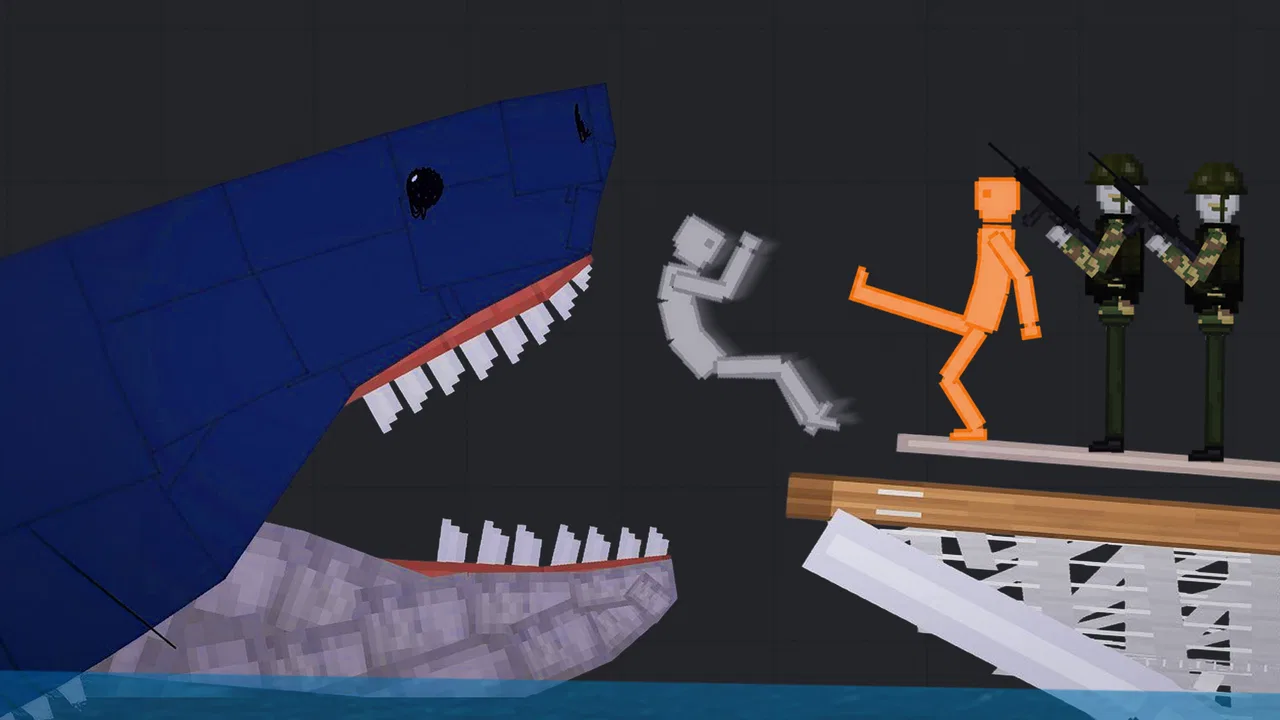
I approached Ragdoll 3: Monster Playground expecting a quick, silly physics game, and that is exactly where it works best. It is a casual sandbox built around experimenting with ragdoll characters, monsters, objects, and the unpredictable results that appear when everything collides. I would not describe it as a deep progression game or a carefully structured challenge. Its appeal is more immediate: place something in the scene, try an interaction, watch the outcome, and adjust the setup when the result is funny, surprising, or simply more chaotic than expected.
That focus gives the game a clear identity. Instead of asking me to master complicated controls, it encourages short bursts of curiosity. I can open it when I have a few minutes, create a strange situation, and stop when the experiment has run its course. The experience is especially enjoyable when I treat the playground as a toy box rather than a conventional game with a fixed objective. The fun comes from making small experiments and discovering how the scene reacts, not from chasing a traditional win screen.
Developed by oZ Studio, this free casual game is aimed at Teen players and runs on Android devices using version 7.0 or later. It arrived on November 19, 2024, and the current version is 0.3.0. Those details matter because the project still feels like something I would approach with curiosity rather than as a finished, content-heavy alternative to a major physics sandbox. Its average rating is 3.3 from around 1.7 thousand ratings, while the game has passed one million installs. That combination suggests a broad audience, but also a mixed experience that deserves a closer look before downloading.
You May Also Like

 Blood Strike: 2.5 Anniversary
Blood Strike’s Loadouts Turn Every Drop Into a Tactical Gamble
A close look at Blood Strike’s custom loadouts: how fast access to signature weapons reshapes its battle royale rhythm, rewards preparation, and narrows the gap between fights.

 Pandora - Music & Podcasts
Pandora’s Music Is Easy to Start, but Harder to Recover
Pandora’s strength is its low-effort path from a seed to a station. Its weak spot is how much confidence it asks you to place in connection, setup, and quiet recovery.

 8 Ball Pool
 Is Built on Rivalries, Rematches, and Routine
A close look at the rivalries, rematches, shared routines, and unanswered safety questions that turn a quick pool match into a persistent mobile community.

 Samsung Music
’s Quiet Strength Is Playing What You Already Own
Its reach comes less from spectacle than from dependable access to a personal library. That simplicity is both the app’s strongest retention engine and its ceiling.

 AccuWeather: Weather Radar
AccuWeather Review: A Quick, Clear Forecast for Everyday Decisions
For everyday plans, the best forecast is the one you can understand quickly. AccuWeather makes rain timing, radar, and local conditions easy to act on, with a few trade-offs.

 Hill Climb Racing
Why Hill Climb Racing Still Turns Crashes Into One More Run
A tiny car, a bumpy hill and one more upgrade: Hill Climb Racing keeps resurfacing because its simple chaos makes every near-miss feel personal.
More From Our News Desk



How the monster playground feels in actual use
I find the game easiest to judge by asking whether I want to invent the activity myself or be guided through it. In this section, I’ll focus on how its monster-and-ragdoll setup rewards small, deliberate experiments, including a practical way to keep the physics readable rather than turning each session into a jumble. That distinction helps clarify where this kind of playground earns its place, and where a more structured alternative may suit better.
A toy box built around cause and effect
The central pleasure is the freedom to test cause and effect without much pressure. I can arrange the scene, introduce a ragdoll or monster, and see how the physical interaction unfolds. Sometimes the result is entertaining because the movement looks ridiculous; other times the setup collapses in a way I did not expect. That unpredictability is not a side effect of the design. It is the reason to return.
Games in this style can become repetitive when every interaction produces the same response. Here, the best sessions come from changing one element at a time. I might keep the characters in place and alter the object involved, or preserve the object while changing the positioning. This turns a few minutes of random tapping into a simple testing routine. It is a useful approach for players who enjoy observation and trial and error, even when there is no formal puzzle telling them what to do.
I also found that the game benefits from a relaxed mindset. If I launch it expecting a campaign, a detailed story, or a steady stream of objectives, the experience feels thin. If I open it as a digital playground, the lack of structure becomes more understandable. The title is at its strongest when I decide what kind of scene I want to create and accept that the physics may not behave exactly as planned.
Why the physics creates memorable moments
Ragdoll games live or die by their reactions. A rigid, predictable system would make the whole concept feel mechanical, while an overly chaotic system would make experimentation pointless. The appeal here sits between those extremes. I can usually form an idea of what should happen, but the final movement often has enough variation to keep the result amusing.
That makes the game suitable for short, informal play. I do not need to remember a complicated control scheme after leaving it for a day. The basic loop is easy to understand, and the entertainment is visible almost immediately. A younger player within the Teen rating may enjoy the exaggerated physical comedy, while an adult player may appreciate it as a low-commitment way to switch off after work.
There is also a small creative satisfaction in building a scene that looks intentional. Rather than throwing everything into the playground at once, I get better results by leaving space between elements and thinking about what I want to observe. A crowded setup can become visual noise. A restrained arrangement, with one clear interaction, often produces a more readable and satisfying result.
Three practical ways to get more from each session
My first useful tip is to begin with a single question instead of a large pile of objects. For example, I might ask what happens when a monster is positioned near a moving obstacle, then repeat the test from a slightly different angle. This makes the game feel less random and helps reveal which outcomes are caused by placement rather than luck. It also reduces the frustration of losing track of what triggered a particular reaction.
My second tip is to treat the playground as a recording-free idea generator. If I am trying to make a funny scene, I first build the setup slowly and only add the final element once the earlier pieces are stable. That workflow gives me more control than tapping everything into the scene immediately. It is a small distinction, but it changes the experience from uncontrolled clutter into a simple visual experiment.
My third tip is to use short sessions deliberately. The game does not need to occupy an entire evening to be worthwhile. A few experiments during a break can be more enjoyable than forcing a long session after the novelty has faded. This is one of its genuine strengths compared with more demanding casual games: I can leave at any point without feeling that I have abandoned a mission, a team, or a long progression chain.
The everyday scenario where it makes sense
Imagine waiting for an appointment with ten minutes to spare. I would not choose a story-driven adventure in that situation because I might stop in the middle of an important sequence. I would also avoid a competitive game if I did not want the pressure of a match. This is where the monster playground fits nicely. I can run a few experiments, enjoy the unexpected reactions, and close it when my name is called.
The same applies to a quiet evening when I want something interactive but not mentally demanding. I can create a scene, observe the result, and restart without having to study a tutorial or remember a complex objective. That simplicity is more valuable than it sounds. Many games categorized as casual still demand constant attention, while this one can function as a small digital toy.
Where the experience starts to lose momentum
The biggest weakness is also connected to the game’s main idea: open-ended play depends heavily on the player supplying the imagination. When I am in the mood to experiment, the freedom feels refreshing. When I am tired or looking for direction, the same freedom can feel empty. Without a strong sequence of challenges pushing me forward, the game may run out of momentum once I have tested the most obvious interactions.
This is why I would not recommend it as a replacement for a level-based casual game. If you prefer clear goals, unlocks, missions, or a sense of measurable progress, a puzzle game or arcade title may hold your attention longer. The playground provides room to play, but room alone does not guarantee lasting variety. Its replay value depends on whether you enjoy inventing scenarios for yourself.
There is another trade-off in physics-based entertainment: the same unpredictability that creates funny moments can also make an experiment feel unsatisfying. If I set up a scene carefully and the result does not resemble what I intended, I may laugh once, but I may not want to repeat the process. Players who prefer precise control should keep that limitation in mind. This is a game about observing consequences, not commanding every movement with exact accuracy.
Free access and the question of spending
The game is free to download, which makes it easy to test without a financial commitment. It includes in-app purchases ranging from $0.99 to $29.99 per item. For me, that means the sensible approach is to play the basic experience first and decide whether the available content justifies any optional spending. A free entry point is useful here because the game’s appeal is personal: some players will immediately enjoy the sandbox loop, while others will find it too unstructured.
I would be cautious about paying simply to solve a lack of direction. If the core playground already feels repetitive, extra purchases may not change the fundamental style of play. Spending makes more sense for someone who has already enjoyed several sessions and knows exactly what additional content they want. That is a broader lesson with this kind of game: purchases should expand an experience that is already working, not be used to discover whether the basic concept suits you.
Who should try it, and who should skip it
I think the best audience is made up of players who enjoy physics toys, ragdoll comedy, and unscripted experiments. It is a good match for someone who likes opening a game without a strict plan and seeing what develops. It can also suit families looking for a simple, visually obvious game, although the Teen content rating means parents should make their own judgement about whether the tone is appropriate for a particular player.
Creative players may get more from it than score-focused players. Someone who enjoys arranging scenes, testing combinations, or creating absurd situations will probably understand the appeal quickly. The game also makes sense for people with older Android devices that meet the minimum operating system requirement, provided they are comfortable with the casual sandbox format and do not expect the scope of a large commercial production.
I would skip it if my priority were a polished campaign, competitive depth, or a clear long-term progression system. I would also look elsewhere if I disliked repeated experimentation or needed every session to offer a defined objective. A conventional puzzle game is a better choice when I want carefully designed problems. A platformer is better when I want precise movement and mastery. A story game is better when I want characters and narrative to carry the experience. This title is not trying to replace those formats, and judging it by their standards leads to disappointment.
What to expect from the current build
The current version, 0.3.0, is important context for expectations. I approach it as an evolving casual sandbox rather than a feature-complete game with endless depth. That does not make it unplayable; it simply means I value the immediate experimentation more than the amount of long-term content. Players who enjoy seeing how a concept develops may be comfortable with that position, while players demanding extensive polish may prefer to wait for a more mature experience.
In practical terms, I would install it when I want a quick test, not when I am choosing one main game for the next several months. I would also make sure my device uses Android 7.0 or newer before trying it. The low barrier to entry is part of the attraction, but the game still needs to be judged on the quality of its moment-to-moment interactions rather than on its install count.
My final judgement
Ragdoll 3: Monster Playground succeeds when it stays small, immediate, and playful. I like that it does not demand a long commitment and that a simple setup can produce a result worth watching. The strongest moments come from controlled experimentation: place one character, introduce one change, observe the reaction, and build from there. That approach reveals more of the game than filling the scene with everything at once.
Its limitations are clear. The open-ended structure can feel directionless, the novelty may fade for players who need goals, and unpredictable physics will not satisfy anyone looking for precise control. The in-app purchase range also makes it wise to explore the free experience before spending. Those are not minor details; they determine whether the game feels like a charming toy or a shallow distraction.
My recommendation is therefore specific rather than universal. Try it if you want a free casual sandbox for short sessions and enjoy making your own ridiculous experiments. Skip it if you need a campaign, detailed progression, or carefully measured challenges. For the right player, oZ Studio’s game offers a pleasant little playground where curiosity does most of the work. It is best enjoyed as a physics toy with monster-themed chaos, not as a full-scale adventure.
FAQs for Ragdoll 3: Monster Playground
01What is Ragdoll 3: Monster Playground?
Ragdoll 3: Monster Playground is a physics-based sandbox game focused on experimenting with ragdoll characters, monsters, objects, and different environmental setups. Instead of following a traditional story, you create your own scenes and observe how characters react to impacts, traps, tools, and hazards. The appeal comes from its open-ended gameplay, humorous animations, and the freedom to test unusual combinations at your own pace.
02How do you play Ragdoll 3: Monster Playground?
Gameplay is based on selecting characters and objects, placing them in the playground, and interacting with the environment. You can move ragdolls around, introduce monsters or dangerous items, and watch the physics system produce different results. There is no single correct way to play, so experimentation is important. Players who enjoy creative sandbox games will likely appreciate discovering unexpected reactions rather than completing fixed missions.
03Is Ragdoll 3: Monster Playground suitable for children?
The game may look cartoon-like, but its gameplay includes ragdoll accidents, monster attacks, explosions, traps, and other forms of simulated violence. The presentation is generally exaggerated and physics-based rather than realistic, yet parents should still review the content before allowing younger children to play. In addition, advertisements or in-app purchase options may vary depending on the device and version, so checking the store listing is recommended.
04Does Ragdoll 3: Monster Playground require an internet connection?
Basic sandbox gameplay may be available without a constant internet connection, which makes it convenient for short sessions while traveling or when mobile data is unavailable. However, certain features can depend on connectivity, including advertisements, store-related content, updates, or online services. Because requirements may change between releases and platforms, it is best to check the current Google Play or App Store description before downloading.
05Is Ragdoll 3: Monster Playground free to download?
Ragdoll 3: Monster Playground is generally offered as a free download, but the exact monetization model can depend on the Android or iOS version. Free games of this type commonly include advertising and may provide optional purchases, such as removing ads or unlocking additional content. Before installing, review the store page for the latest information about permissions, purchases, supported devices, and any age-rating limitations.
Pros
- Creative physics sandbox encourages experimentation and funny outcomes.
- Simple controls make it easy to start playing immediately.
- Many objects and monsters create varied playground scenarios.
- Short sessions work well for casual mobile gaming.
- Offline play is useful when you have no internet connection.
Cons
- Physics can feel unpredictable and frustrating during precise challenges.
- Frequent ads may interrupt gameplay
- especially between activities.
- Some content and customization options may require in-app purchases.
- Graphics are basic and animations can look rough on some devices.
- The gameplay may become repetitive after exploring the main interactions.

Ragdoll 3: Monster Playground
Gallery